
LVTShift
An open-source toolkit for modeling land value tax shifts in any U.S. city — parcel by parcel, revenue-neutral by construction.

1
command to model a new city
MIT
licensed, free and open source
Model your city in one command
LVTShift is built to be driven by an AI coding agent in plain English. Open Claude Code or Codex, paste this, and let it set everything up:
Clone and set up github.com/gregmiller00/LVTShift, then model land value tax for <my city> by following its /lvt-city workflow.The agent clones the repo, installs everything, and starts modeling — then asks you a few questions about the policy.
Answer five questions
Which levies to include, which reform to model, how to treat exemptions, where the city is, and what official revenue figure to validate against.
The agent does the work
It finds the parcel data, rebuilds your city's current tax system, and models the proposed policy — revenue-neutral by construction.
Get parcel-level results
A standardized CSV of every parcel's current and proposed tax, plus charts breaking down impacts by property category and neighborhood.
/lvt-city spokane
1. Which government body? (city only / full stack)
2. Which reform? (split-rate N:1 / building abatement)
3. Keep existing exemptions? (yes / no)
4. County and state?
5. Official revenue figure to validate against?
The agent writes a Python notebook, and the notebook does the modeling — so every result is reproducible, auditable, and identical on every re-run. No black box.
Four commands
/lvt-city
Runs the full modeling pipeline end-to-end: finds the data, rebuilds the current tax system, models the proposed policy, and produces parcel-level results and graphics.
/legality-analyzer
Maps the legal pathway to LVT in a city or state — constitution, statutes, case law — and identifies which reform vehicles are open.
/explain-model
Writes a plain-language methodology audit of an existing model: the data used, levies included and excluded, exemption treatment, and limitations.
/refine-model
Re-runs an existing model with changed parameters: a new split ratio, a switch to building abatement, or different exemptions.
Wondering where LVT already stands in your state? Pair /legality-analyzer with our Legislation Tracker.
What the models show
City diagnostics
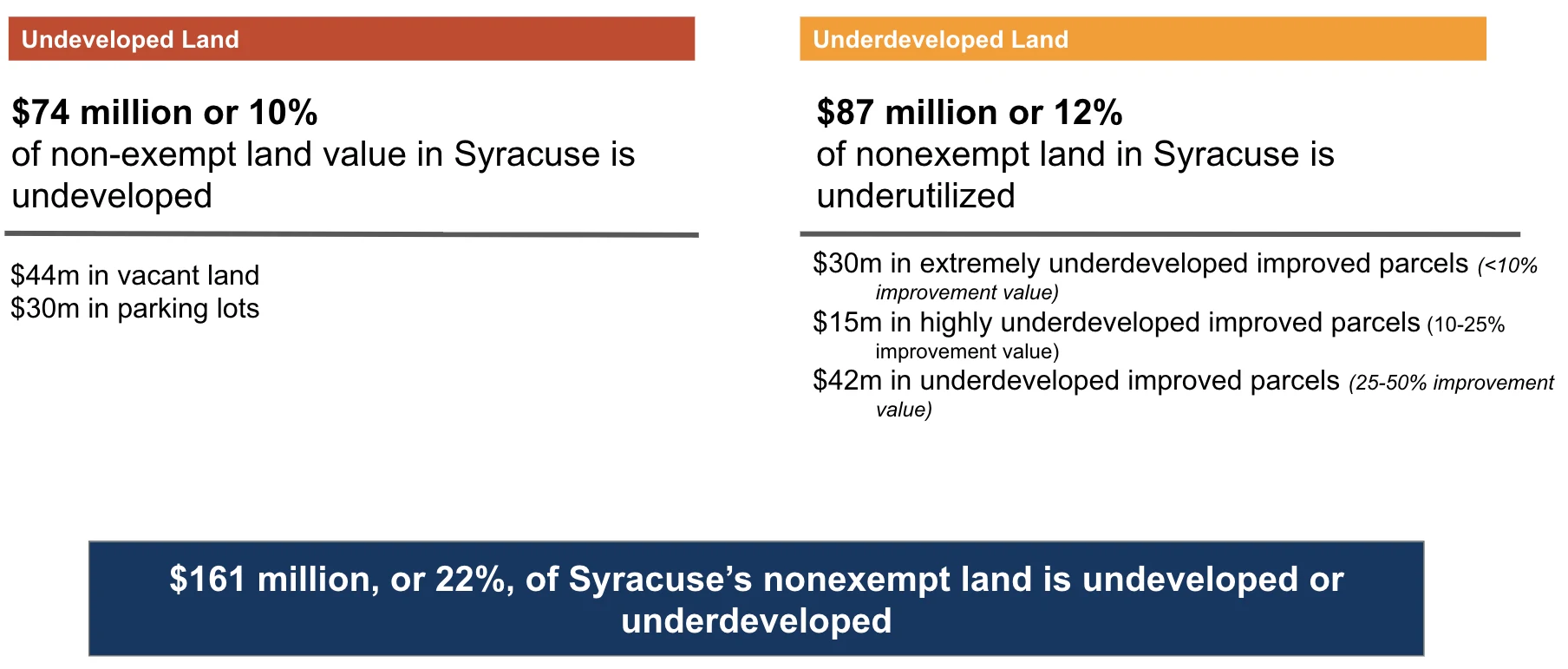
Before modeling any reform, LVTShift surfaces the shape of your city's land — how much value sits in vacant lots, parking, and underused parcels, and what it would be worth if put to use. (Shown: Syracuse.)
Property category impacts
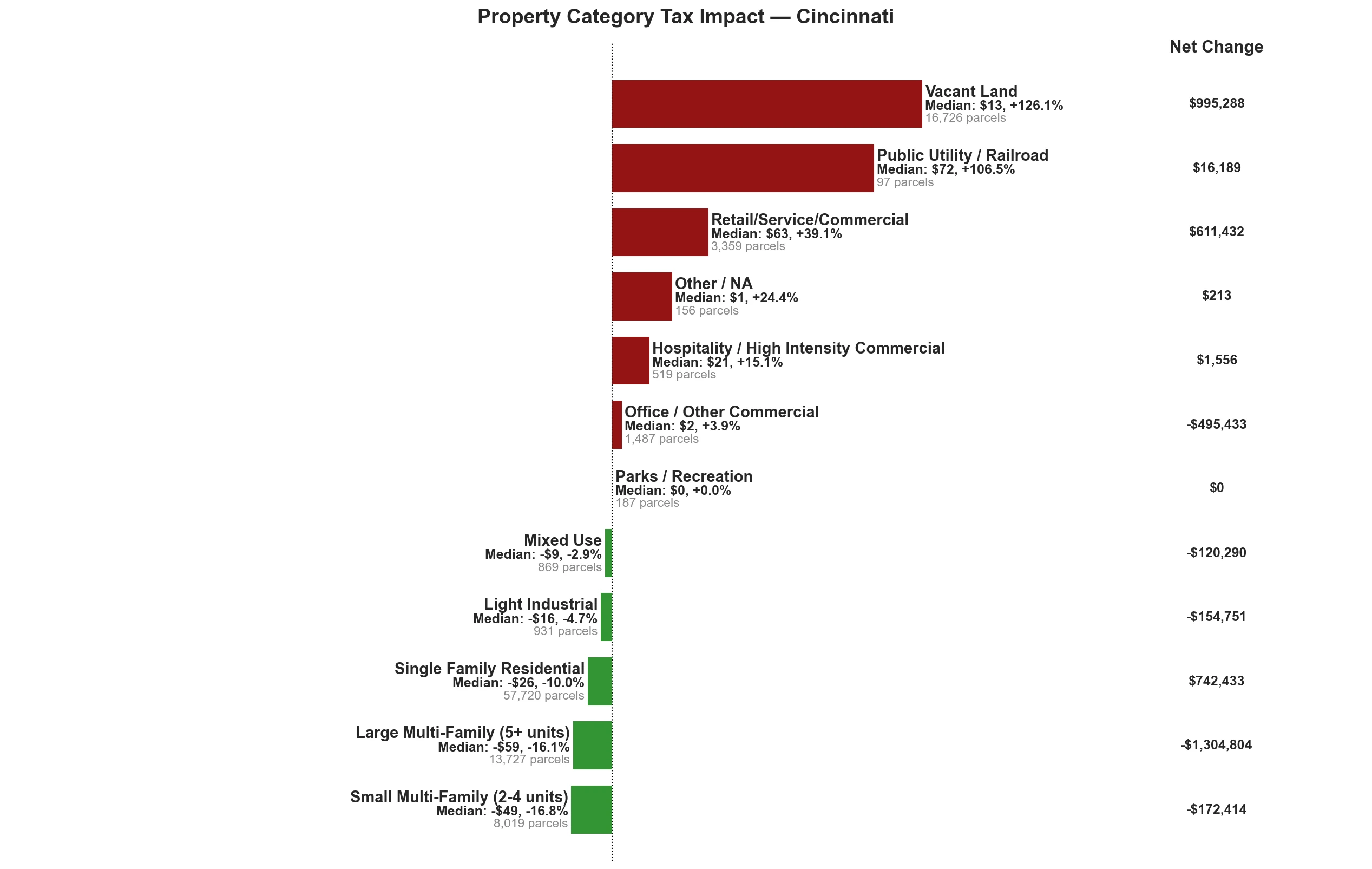
See how a revenue-neutral land value tax shift changes the median tax bill for every type of property. In Cincinnati, vacant and underused land pays more, while homes and multifamily buildings pay less.
Progressivity analysis
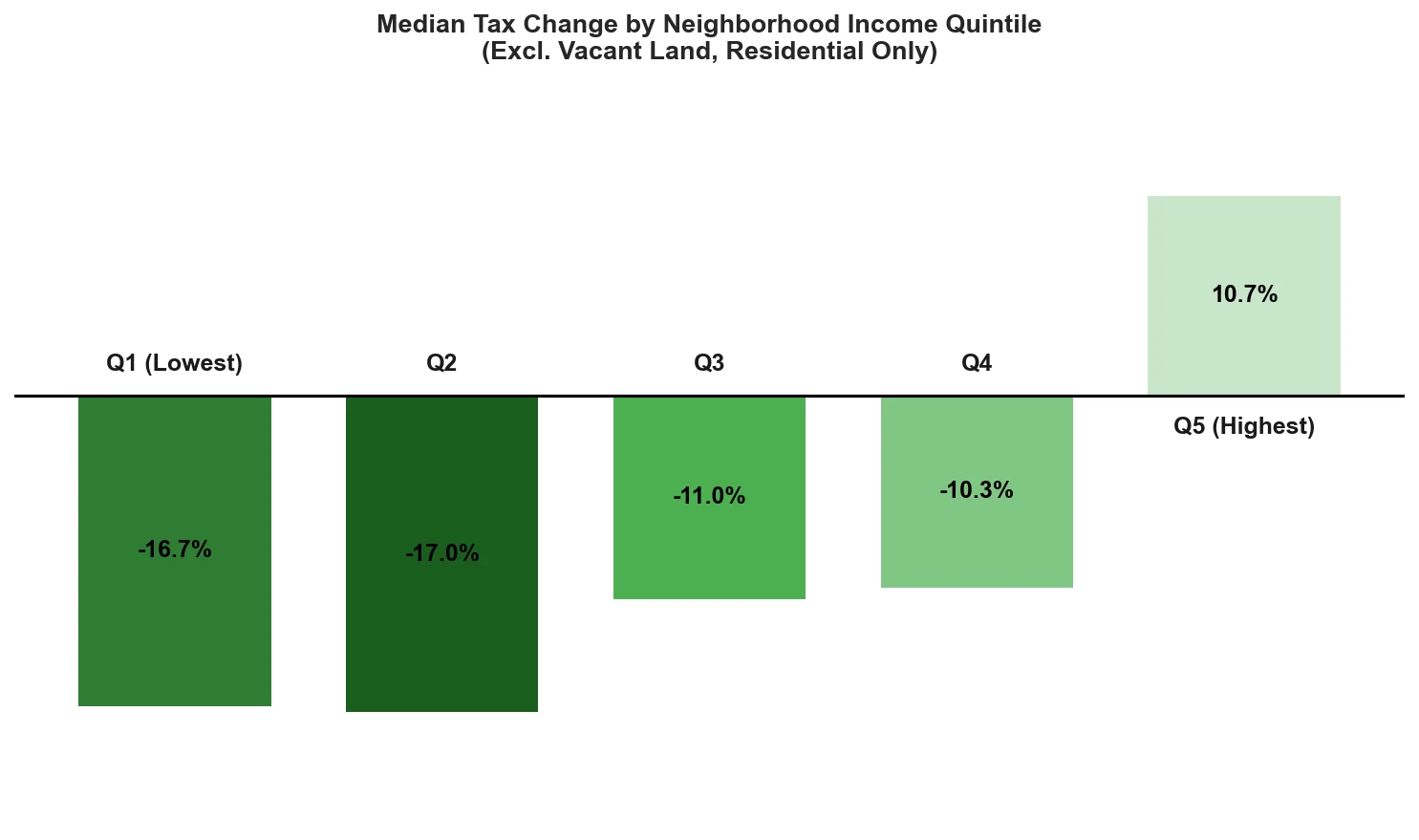
Paired with neighborhood income data, the model shows how the shift lands across the income spectrum. In Cincinnati, the lowest-income neighborhoods see the largest cuts to their residential tax bills.
From model to published research
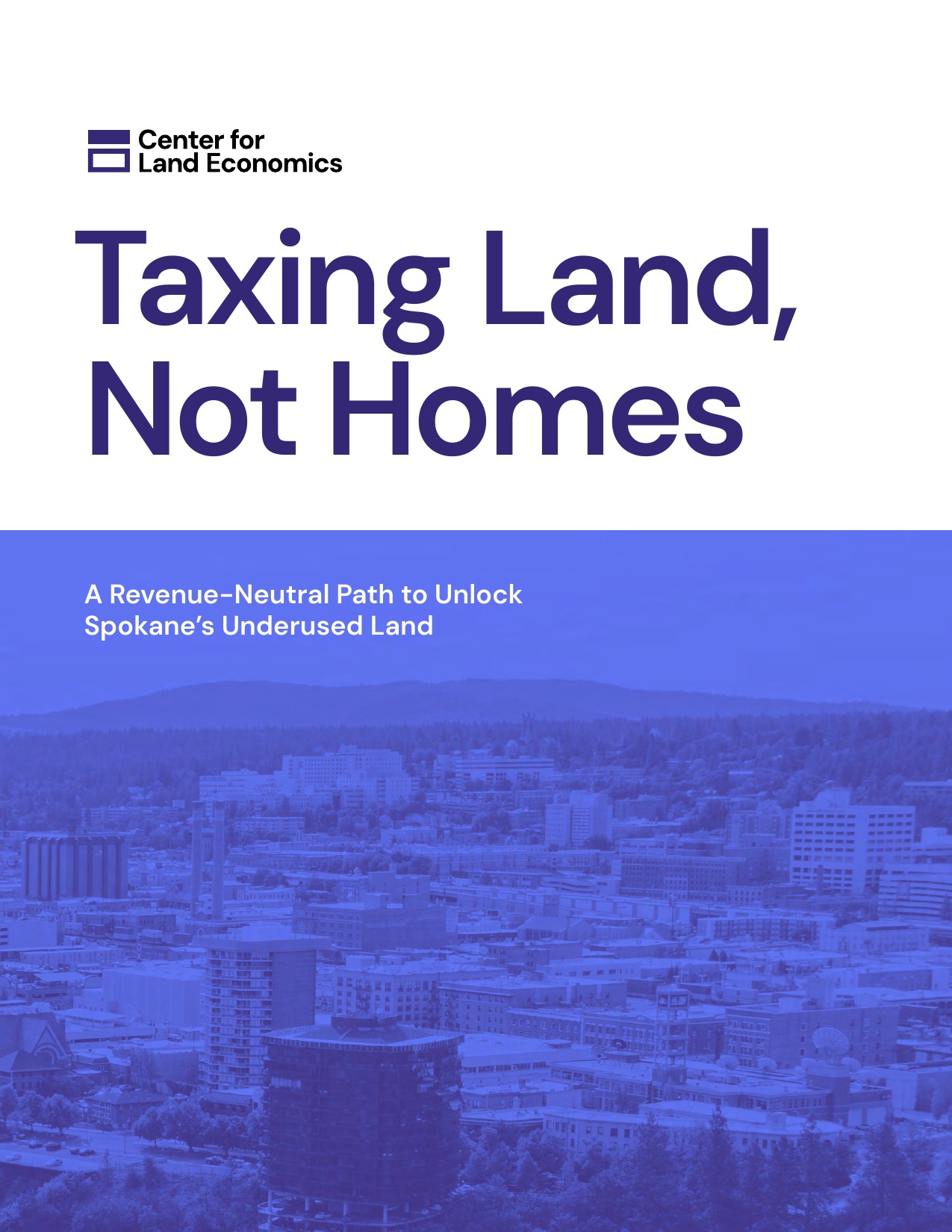
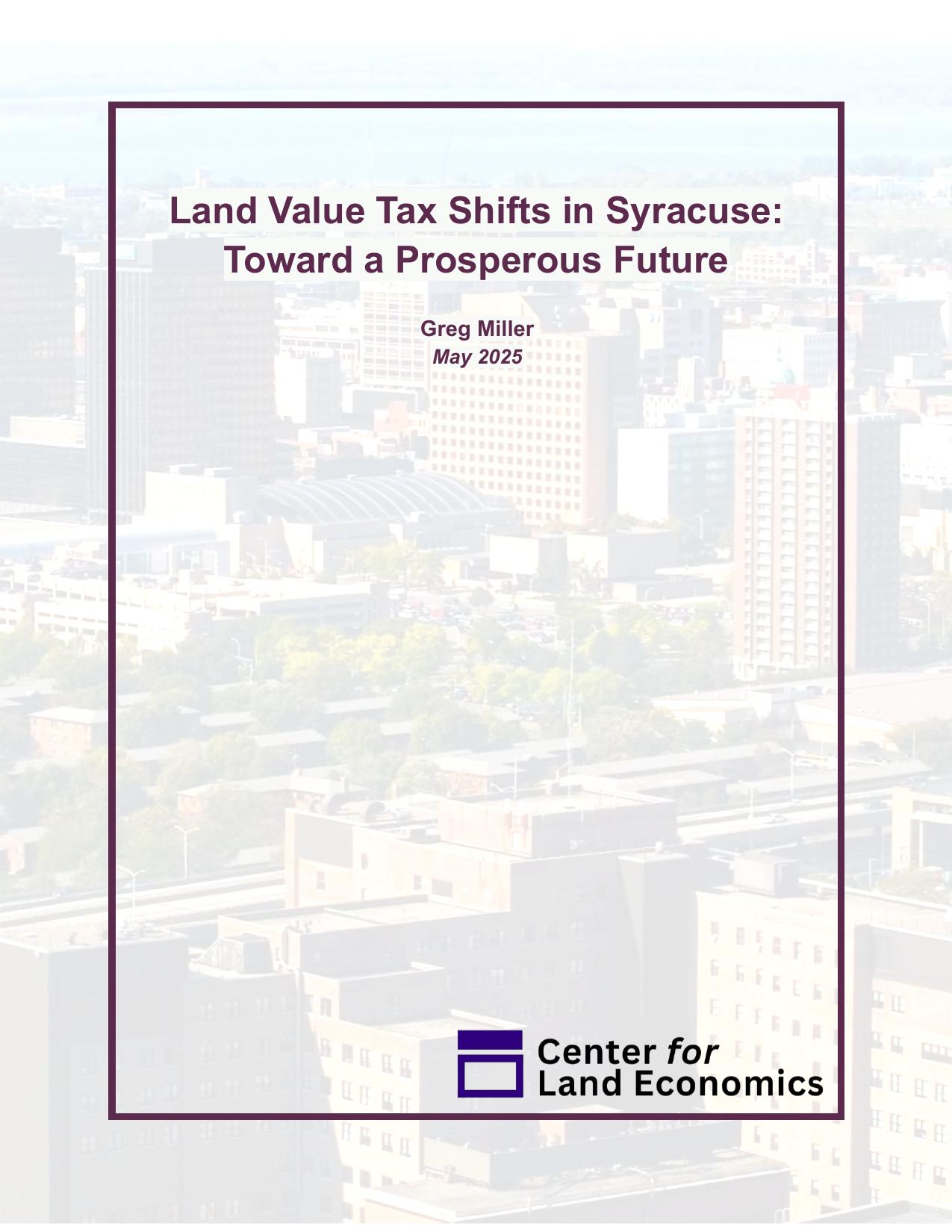
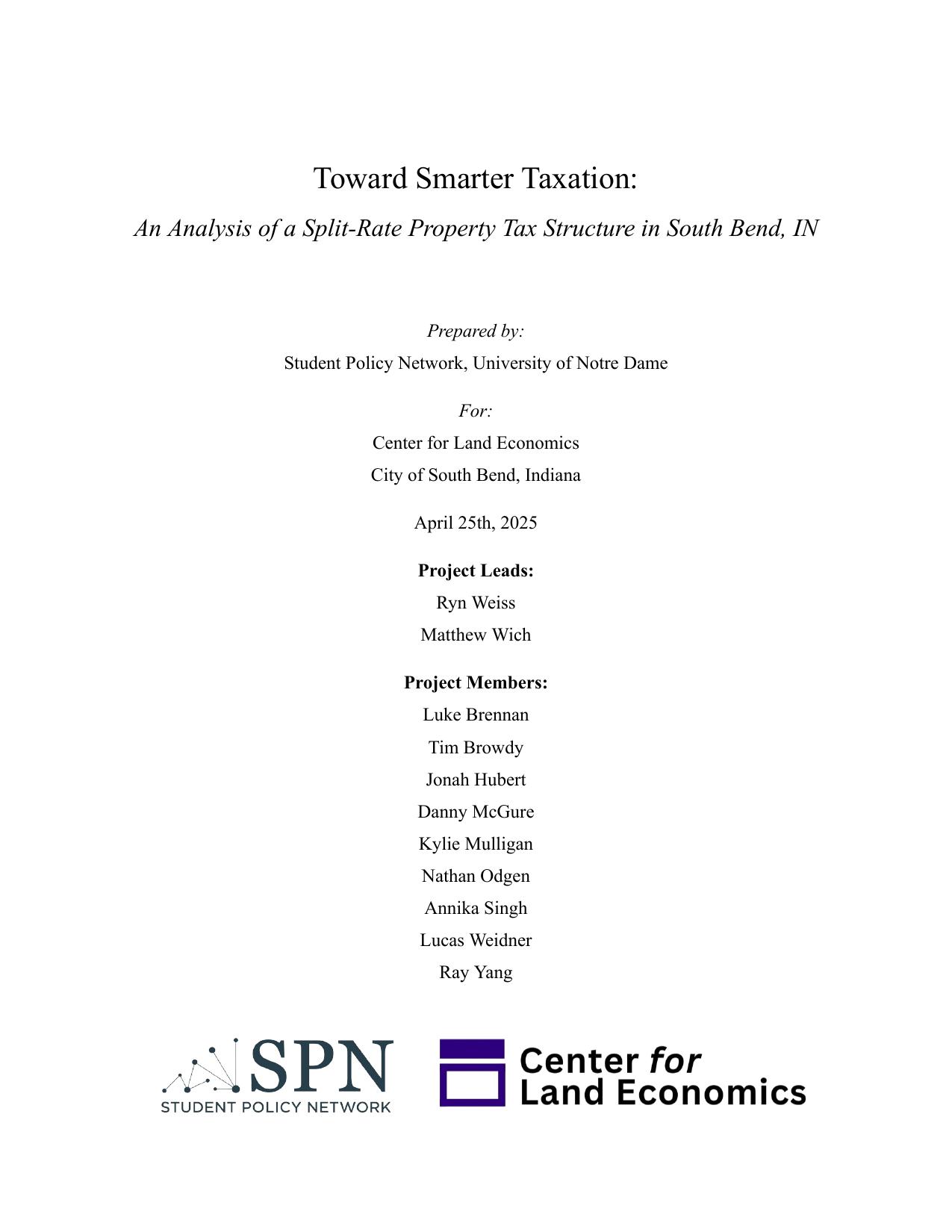
LVTShift models are the starting point for CLE's published city reports.
Get started
You don't need to be technical — the command above does the setup for you. Prefer to do it by hand?
- Clone the repo and ask the agent to set it up.
- Type /lvt-city <your city> and answer five questions.